
Screening for obstructive sleep apnea: comparing the American Academy of Sleep Medicine proposed criteria with the STOP-Bang, NoSAS, and GOAL instruments
- S-Med

- Sep 30, 2025
- 2 min read
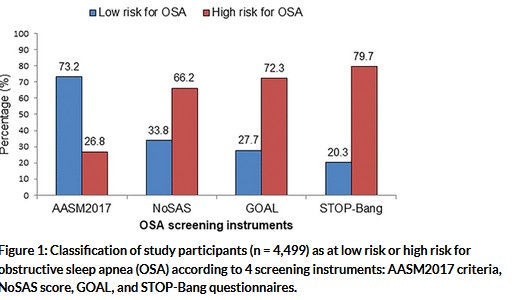
In a large cohort of patients referred to a sleep laboratory and systematically evaluated with full in-laboratory PSG we found that GOAL, STOP-Bang, and NoSAS screening tools, but not AASM2017 criteria, fulfill the criteria of useful screening approaches for OSA. In addition, the AASM2017 criteria identified a smaller proportion of patients as being at high risk for moderate-to-severe OSA compared to the other 3 instruments, suggesting that implementation of this approach would undoubtedly identify more selectively those with moderate-to-severe OSA but at the expense of discarding many patients with OSA. Indeed, unlike GOAL, STOP-Bang, and NoSAS, the AASM2017 criteria prioritize specificity over sensitivity, making it potentially valuable only when there is unrestricted access to sleep studies but not of pragmatic value in a highly prevalent and often under diagnosed disease such as OSA To our knowledge, this is the first study that was designed to assess the predictive performance of the recommendation proposed by the AASM (AASM2017) to identify patients at high risk for moderate-to-severe OSA, in addition to comparing the discriminatory power of this instrument with that obtained from 3 other validated screening tools (STOP-Bang, NoSAS, and GOAL).
A possible explanation for the poor performance of the AASM2017 criteria may be the requirement that high-risk individuals must be patients with EDS assessed by the ESS. Several studies have already shown that EDS criteria as determined by the ESS exhibit poor performance in screening for OSA because not all patients with OSA are necessarily sleepy Because the ESS contains exclusively subjective data, it lacks adequate reproducibility when it is applied sequentially in addition to unsatisfactory correlations with objective sleep tests. Regarding the completion of the AASM2107 recommendation criteria among sleepy individuals, there is still a need to fill in 2 of 3 subjective variables. Subjective variables are obviously more prone to bias. Another fact that has already been widely documented is that OSA-related symptoms are quite different between sexes; for example, loud snoring and observed apnea are much more frequent in men than in women In addition, it should also be highlighted that women report tiredness more frequently, although they are not excessively sleepy when assessed by the ESS. The STOP-Bang has 4 such subjective variables out of a total of 8, while both the GOAL and NoSAS have only 1 subjective variable out of a total of 4 or 5, respectively. It is plausible that the reduced number of subjective elements in the instruments will ultimately translate into a lower rate of bias during its completion and therefore yield more consistent and robust performance.


Comments